A food processing equipment spare parts strategy should focus on the parts that create the greatest production loss when they are unavailable—not simply the parts used most often. Start by identifying equipment that can stop a line, estimating the consequences of a failure, checking supplier lead times, and stocking only the components that cannot be sourced or substituted quickly enough.
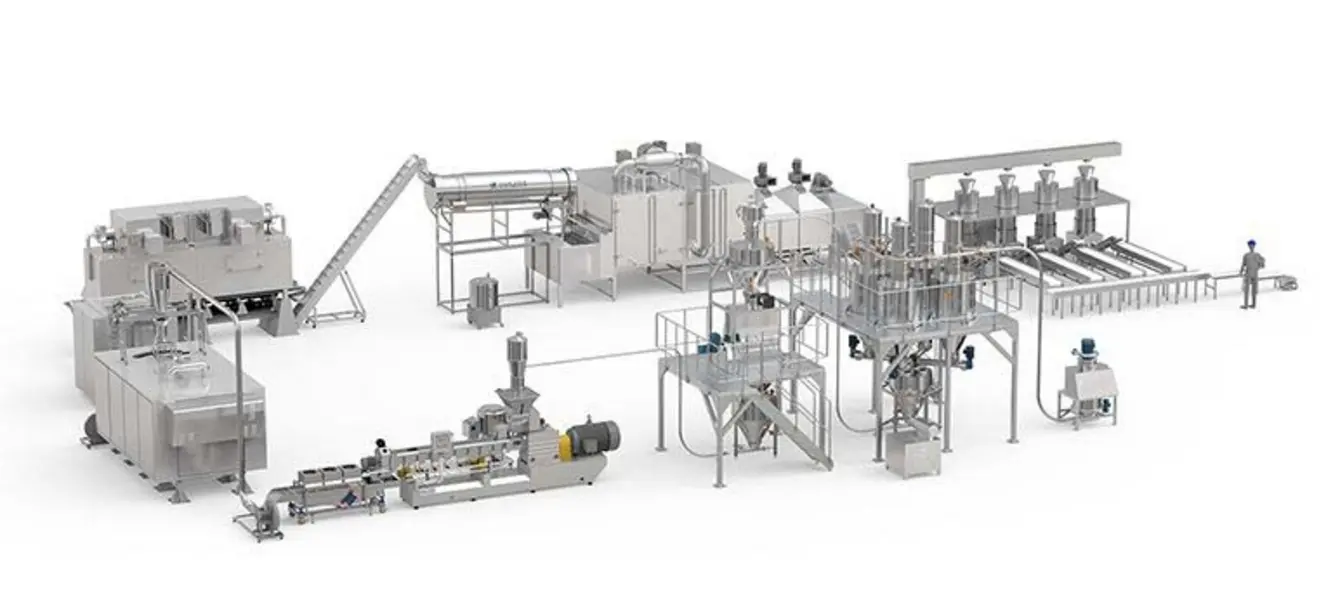
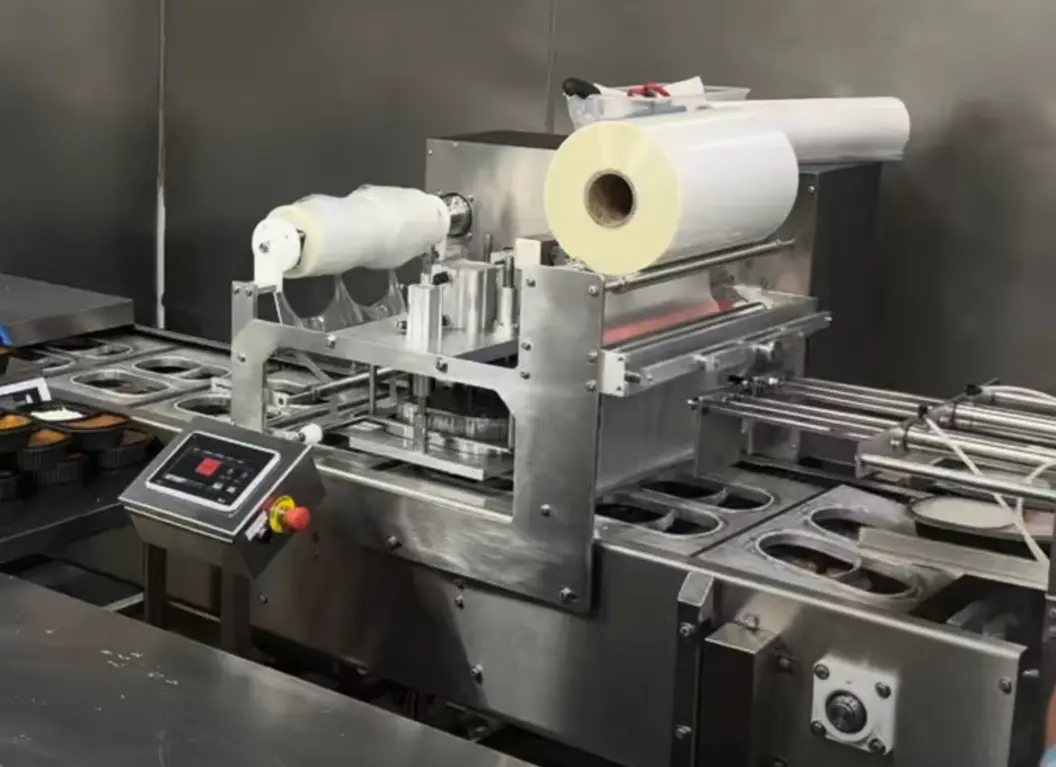
For food plants, the objective is not to fill a storeroom with every possible replacement item. It is to make repair work predictable when a filler, conveyor, pump, case packer, metal detector, slicer, cartoner, or utility system fails. A practical plan combines equipment criticality, part lead time, interchangeability, shelf life, and a disciplined process for recording every issue and replenishment.
Start with production risk, not the parts catalog
The first mistake in maintenance spare parts inventory planning is to begin with a supplier’s recommended parts list and treat every item equally. OEM lists are useful inputs, especially for new equipment, but they do not reflect the realities of a particular plant: line redundancy, production schedules, technical skills, available suppliers, or the cost of a missed shipment.
Instead, begin with an equipment risk review. List the assets that support each processing and packaging line, including upstream and downstream equipment. A failure in a low-cost component can stop a complete system if no bypass, alternate route, or spare machine is available.
For each asset, ask:
- Does failure stop the entire line, reduce output, or affect only one function?
- Is there another machine, line, or manual method that can temporarily carry the load?
- How long can production continue before product quality, packaging integrity, or scheduled deliveries are affected?
- Can the maintenance team diagnose and replace the component internally?
- Is a qualified vendor, distributor, or repair shop available quickly?
- Does the component have a long lead time, limited supplier base, or discontinued status?
This produces a more useful priority list than annual spend or historical usage alone. A commonly used bearing may be easy to purchase locally. A rarely used servo drive, gearbox, machine controller, or custom change part may be far more important to stock.
Rank equipment and parts separately
An asset can be highly critical while some of its parts are not. Likewise, an inexpensive part can be critical if its absence prevents a repair. Use two related ratings: one for the machine or system, and one for the individual spare part.
Equipment criticality
Classify equipment according to the operational result of an unplanned failure. A simple tiering system is usually enough:
| Equipment tier | Typical consequence of failure | Planning approach |
|---|---|---|
| Tier 1: line-stopping | Production cannot continue, or a key utility or control system is lost | Identify recovery parts and stock high-risk items on site |
| Tier 2: capacity-limiting | Production continues at reduced speed or requires a workaround | Stock selected parts or establish rapid replenishment arrangements |
| Tier 3: localized impact | Failure affects a nonessential function or a redundant asset | Purchase as needed or hold limited common spares |
A primary packaging machine may be Tier 1 if there is no alternate line. The same model may be Tier 2 in a plant with compatible spare capacity elsewhere. Criticality must be based on the actual production configuration, not the machine’s original purchase value.
Spare-part criticality
For each potential spare, consider the consequence of its absence during a failure. Important factors include:
- Failure effect: Does the part prevent the machine from starting, running, sealing, conveying, dosing, or controlling the process?
- Lead time: How long does the supplier need to confirm, ship, and deliver the correct item?
- Substitution: Is there a technically verified equivalent, or is the part proprietary?
- Supply risk: Is there one source, an aging manufacturer, or a recurring availability problem?
- Repairability: Can the failed part be rebuilt, rewound, resealed, or refurbished locally?
- Commonality: Is the same part used across several machines or plants?
- Storage condition: Can it be stored safely without degradation, contamination, corrosion, battery depletion, or loss of calibration?
A useful distinction is between a critical spare and an insurance spare. A critical spare has a serious operational consequence if unavailable. An insurance spare may be expensive or rarely used, but is held because replacement would be difficult after a failure. Both may belong in the storeroom, but their review frequency and stocking logic can differ.
Build a critical-spares register
Create one controlled register rather than relying on informal knowledge, old purchase orders, or handwritten notes. The register can be managed in a CMMS, ERP system, maintenance inventory application, or a well-controlled spreadsheet during an early program stage.
Each record should include:
- Internal stock number and manufacturer part number
- Equipment and location where the part is used
- Equipment model, serial number, and applicable revision where relevant
- Part description and key technical specifications
- Criticality tier
- Approved suppliers and current lead-time information
- Preferred quantity on hand, reorder point, and maximum quantity
- Known approved equivalents or interchangeable parts
- Storage location and environmental requirements
- Unit cost and repair or refurbishment options
- Last issue date, last physical count, and next review date
The record should also state what the part does. Descriptions such as “motor,” “sensor,” or “seal” are too vague for an emergency repair. Include enough detail for a technician to verify the item before installation, such as voltage, mounting arrangement, material, shaft size, communication type, seal material, or relevant machine position.
Set stocking levels with a risk-based method
There is no universal rule that every critical part requires two units on the shelf. Stocking decisions should reflect exposure, not a blanket service-level target.
A practical approach is to sort parts into four actions:
| Stocking action | When it fits |
|---|---|
| Stock on site | Failure stops production, lead time is long, no qualified substitute exists, and no internal source is available |
| Stock one with immediate reorder | A single spare supports repair, but replacement is available within an acceptable time frame |
| Source through a rapid-response plan | The part is critical but readily available from multiple qualified suppliers or another plant location |
| Buy as needed | Low production consequence, short lead time, or readily available substitute |
For a stock-on-site item, determine whether one unit is enough. Consider whether the first spare could fail during installation, whether multiple identical assets operate at once, and whether the supplier lead time begins only after technical review or factory approval. For common wear components, consumption history may support a higher quantity. For expensive, infrequently used electronics, one verified spare and a tested sourcing plan may be the better choice.
Do not ignore shelf life. Certain seals, adhesives, batteries, lubricants, electronics, and elastomeric components can become unsuitable if stored incorrectly or retained too long. Follow the manufacturer’s storage guidance, rotate stock where appropriate, and inspect items during cycle counts.
Validate interchangeable components before an emergency
Interchangeability can reduce inventory, but assumptions create repair delays. A motor, drive, sensor, valve, bearing, gearbox, or controller that appears similar may have different dimensions, materials, firmware, electrical ratings, washdown suitability, or communication settings.
Document only substitutions that have been checked by qualified maintenance, engineering, and operations personnel. For food-contact or hygienic-process components, confirm that the replacement is appropriate for the application and cleaning environment. Verify any requirements related to product contact, sealing, sanitation, environmental exposure, and machine performance before approving an alternate.
Where possible, standardize future purchases around common components. Standard motor frames, sensors, pneumatic fittings, gearbox families, bearings, and drive types can reduce the number of unique stock items. However, avoid standardization changes that compromise equipment performance or invalidate supplier requirements.
Manage long lead times and obsolete food machinery parts
Long lead time is not fixed. A supplier may quote one lead time for a standard item, another for a configured component, and a different timeline when a repair requires factory evaluation. Review lead times periodically, especially after supply disruptions, OEM changes, or repeated expedited orders.
For obsolete food machinery parts, waiting for a failure is usually the most expensive option. Identify aging assets by reviewing discontinued controls, unsupported software, unavailable drives, proprietary components, and machines with limited documentation.
Then choose one of four paths:
- Buy a final-life spare: Appropriate when the item is still available, the asset has remaining service life, and storage is feasible.
- Repair or refurbish: Suitable when a qualified provider can restore the component and testing can confirm reliable operation.
- Retrofit a subsystem: Replace obsolete controls, drives, guards, actuators, or other assemblies while the core machine remains mechanically sound.
- Replace the asset: Appropriate when repeated failures, unavailable parts, declining performance, or support limitations make continued operation too risky.
The decision should include more than the cost of the replacement part. Compare expected downtime, product loss, lost production opportunity, repair labor, temporary workarounds, and the risk of a prolonged outage. A small planned retrofit can be easier to schedule than an emergency redesign during a production interruption.
Connect spare parts to maintenance planning
A spare is most valuable when it is tied to a known repair task. Link critical parts to preventive maintenance procedures, inspection routes, troubleshooting guides, and failure codes in the CMMS.
For example, a planned pump seal replacement should identify the correct kit, required tools, replacement procedure, inspection points, and whether the removed component should be rebuilt. A packaging-line drive replacement should include setup parameters, applicable drawings, and any commissioning checks required before returning the machine to service.
This improves repair quality and avoids a common problem: the correct part is in stock, but no one can confirm which version fits the machine or how to configure it.
Source: ifactoryapp
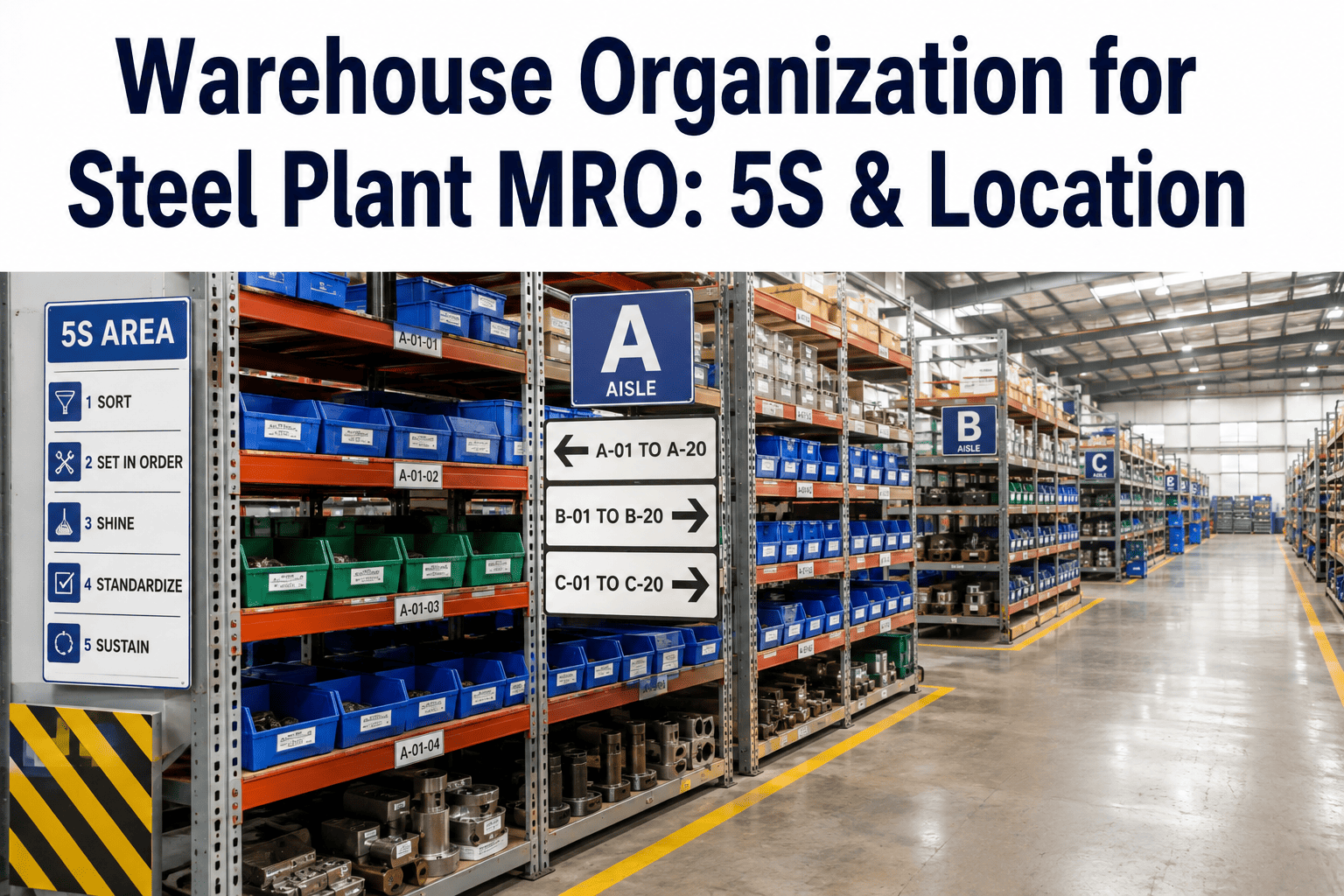
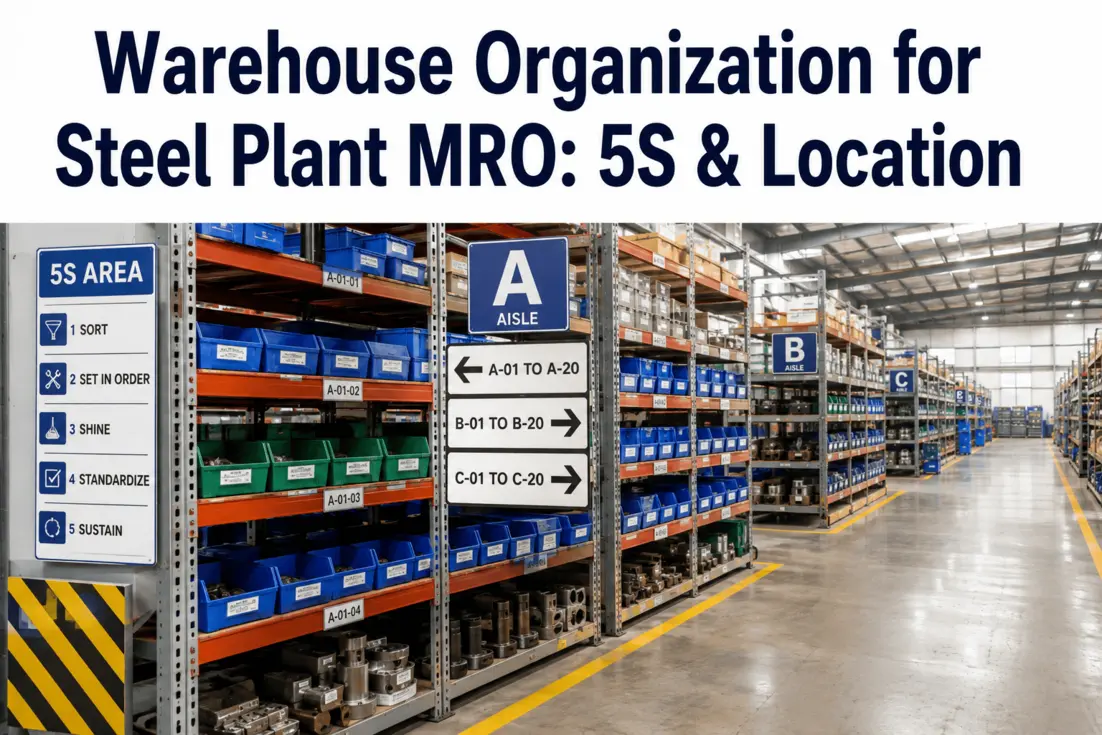
Storeroom controls matter as much as purchasing. Use clear locations, labeled bins, controlled access, and transaction records for all issues and returns. A part that exists in the system but cannot be found during a breakdown is not an available spare.
Review the strategy after every significant failure
Every downtime event should produce a brief review. Ask whether the correct diagnosis was made, whether the required part was available, whether the recorded lead time was accurate, and whether an alternate or repair option would have changed the result.
Useful review questions include:
- Did the failed part belong in the critical-spares register?
- Was the stock quantity adequate?
- Was the item identified correctly and easy to locate?
- Did the repair procedure include the required technical information?
- Did a vendor delay, documentation gap, or approval process extend downtime?
- Should the part be standardized, repaired, stocked differently, or removed from inventory?
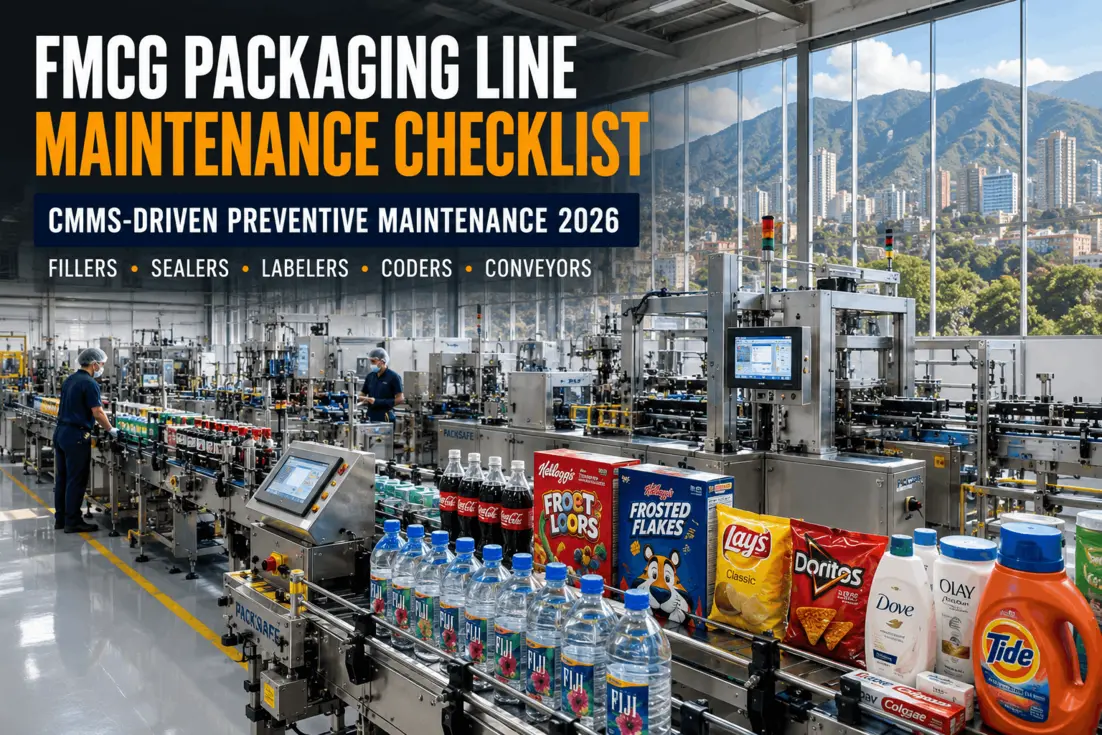
A food packaging line critical spares program should change as equipment, production schedules, suppliers, and plant constraints change. Review Tier 1 assets and their associated spares at least during major maintenance planning cycles, after capital projects, and whenever OEM support changes.
A practical implementation checklist
Use this sequence to establish or improve the program:
- Map major processing, packaging, utility, and control assets by production line.
- Rank assets by downtime consequence and available redundancy.
- Gather OEM spare-parts lists, drawings, manuals, and recent work-order history.
- Identify parts with long lead times, single-source supply, known obsolescence, or no approved substitute.
- Create a critical-spares register with technical details, approved sources, stock locations, and reorder rules.
- Set stocking actions based on consequence, lead time, substitution options, repairability, and shelf life.
- Physically verify inventory and label storage locations.
- Link parts to maintenance procedures and equipment records.
- Document approved alternates and cross-plant availability before a failure occurs.
- Review failures, stockouts, obsolete items, and supplier performance on a regular schedule.
The best maintenance spare parts inventory is neither the cheapest nor the largest. It is the one that allows maintenance teams to restore critical food-production equipment with the right component, the right information, and the shortest practical delay.
References
- Why Spare Parts Matter in Food Packaging Operations. (n.d.). https://www.planitpackaging.com/blog/the-true-cost-of-waiting-why-spare-parts-matter-in-food-packaging-operations
- Critical Spare Parts Management: Best Practices | eMaint. (n.d.). https://www.emaint.com/resources/blog/critical-spare-parts-management-best-practices
- Spare Parts Inventory Management: Cut Downtime & Costs. (n.d.). https://www.getmaintainx.com/blog/spare-parts-inventory-management-strategies
- A Guide to Efficient Spare Parts Inventory Management. (n.d.). https://mceautomation.com/resources/inventory-management/a-guide-to-efficient-spare-parts-inventory-management
- Reducing manufacturing downtime with spare parts management. (n.d.). https://sparetech.io/en/blog/manufacturing-downtime
- Critical Spare Parts: 7 Management Best Practices | Verusen. (n.d.). https://verusen.com/blog/7-best-practices-for-managing-critical-spare-parts-in-mro-2
- Essential Guide to Effective Spare Parts Management | Tractian. (n.d.). https://tractian.com/en/blog/spare-parts-management
- How to Build a Critical Spare Parts Inventory That Actually Prevents Downtime | IDI | IDI. (n.d.). https://www.int-dist.com/resources/critical-spare-parts-inventory-maintenance