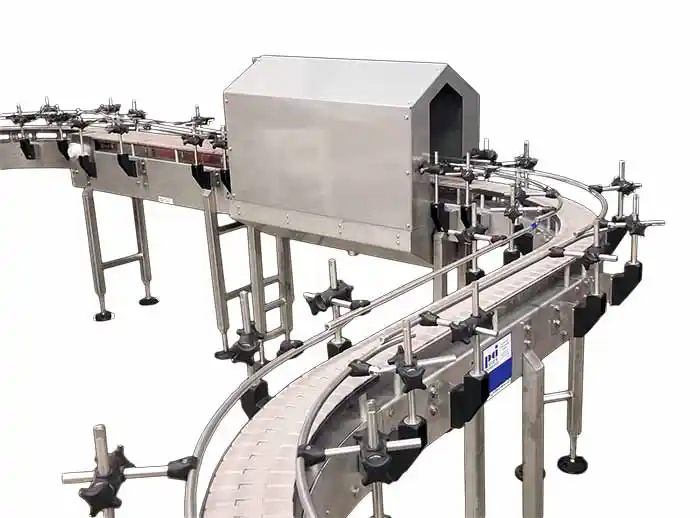
A food conveyor belt cleaning system should be selected around the residue the line actually creates, the belt it must contact, and the sanitation method the plant can support. Start by separating two jobs that are often treated as one: continuous removal of carryback during production, and scheduled cleaning or sanitation between runs. A scraper may control carryback well but is not automatically a complete sanitary conveyor cleaning solution.
For many lines, the right arrangement is layered: a properly tensioned scraper or wiper removes most product at discharge; a brush or secondary cleaner addresses what remains; and, where needed, a conveyor belt wash system uses controlled water, cleaning chemistry, and drainage. The final specification must fit the belt material, product-contact requirements, allergen and microbiological risk assessment, available utilities, and the facility’s validated sanitation program.
Start with a selection framework
Before comparing cleaner models, define the application using five questions:
- What is on the belt? Record whether residue is dry, powdery, sticky, oily, fibrous, wet, fat-based, sugary, or prone to hardening.
- What happens to removed material? It may be recoverable product, waste, an allergen concern, or a contamination source that must be contained.
- Where is the conveyor located? A raw-product area, a post-lethality area, a packaging line, and a utility conveyor can have very different cleaning expectations.
- How often must cleaning occur? Consider in-process carryback control, changeovers, end-of-shift cleaning, and deeper periodic cleaning separately.
- What can the conveyor and room support? Confirm belt construction, frame design, access, drainage, water supply, compressed air if proposed, electrical protection, and wastewater handling.
This process prevents a common error: buying a belt cleaner solely because it removes visible residue, then discovering that it creates inaccessible accumulation points, excessive splash, belt wear, or a difficult cleaning task.
Match the cleaning method to the product
Dry cleaning systems
Dry cleaning commonly relies on scrapers, wipers, brushes, and catch pans. It is often the first choice where the conveyed product is dry or where introducing water would create operational or sanitation complications.
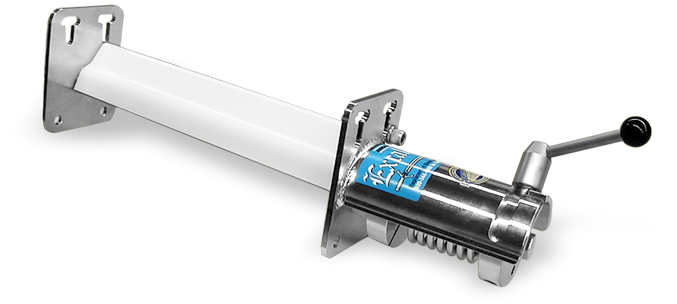
A food processing conveyor belt scraper removes carryback by maintaining contact with the moving belt. Blade geometry, material, contact pressure, and tensioning matter more than the basic idea of scraping. A simple fixed blade may work initially, but wear can reduce contact and cleaning performance. A tensioned design can better maintain contact as the blade wears, provided it is correctly installed and maintained.
Dry arrangements are often useful for loose particulates, dried deposits, and product recovery applications. They may be less effective on sticky, oily, or wet residues that smear rather than release. A brush can supplement a scraper, but it can also retain product if it is not accessible for inspection and cleaning.
Wet cleaning systems
A conveyor belt wash system typically combines spray bars with one or more mechanical actions, such as brushes, wipers, or rollers, followed by water removal and collection. It can be appropriate for sticky residues, wet product, and applications where dry cleaning does not achieve the required visual or operational condition.
Wet cleaning introduces additional design obligations. The system needs contained spray, effective drainage, a catch pan or sump arrangement, access for cleaning, and a plan for wastewater. Uncontrolled water can spread residue beneath the conveyor, increase slip hazards, and create difficult-to-clean areas. It can also add moisture to downstream equipment or product if the belt is not adequately cleared and dried for the application.
Do not assume that more pressure or more water is automatically better. Water delivery, cleaning chemistry, mechanical action, and exposure conditions should be established through the facility’s sanitation procedures and verified with the belt supplier and cleaning-system supplier. Compatibility with the belt, its rods or hinges, seals, bearings, and frame materials is essential.
Low-moisture and steam-based approaches
Low-moisture methods may be considered where water conservation, drying time, or room conditions make a conventional wash station difficult. However, these methods still require a plant-specific review of residue removal, condensate or runoff, operator exposure, equipment compatibility, and sanitation validation. They should not be specified as a substitute for verified cleaning performance simply because they use less water.
Choose components by function, not by catalog category
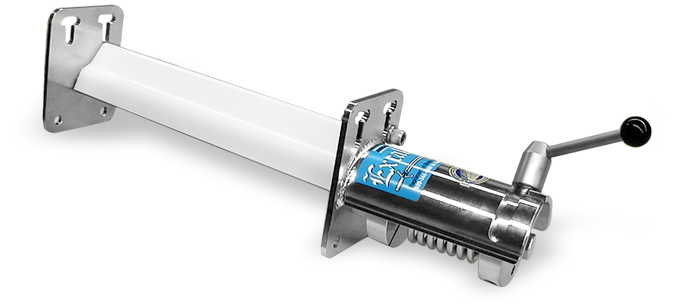
Source: asgco
A practical food conveyor belt cleaning system may use several components, each with a specific role.
| Component | Primary role | Key selection questions |
|---|---|---|
| Primary scraper or wiper | Removes bulk carryback near discharge | Will the blade clean without cutting, gouging, or prematurely wearing the belt? |
| Secondary scraper or brush | Removes remaining film or trapped residue | Is it accessible, cleanable, and suitable for the product texture? |
| Spray bar | Applies water or cleaning solution in a wet system | Are nozzle pattern, containment, and maintenance access adequate? |
| Catch pan | Captures removed product or wash runoff | Does it drain completely and allow easy removal and cleaning? |
| Squeegee or drying element | Reduces residual water on the belt | Does it work at the actual belt speed without trapping residue? |
| Guards and covers | Limit splash and protect personnel | Can they be opened or removed without tools where appropriate and without creating hidden niches? |
| Tensioning mechanism | Maintains consistent scraper contact | Can maintenance personnel inspect, adjust, and replace wear parts safely? |
A scraper system should also have a defined destination for removed material. If recovered product is intended for reuse, the processor must determine whether that practice is acceptable within its food-safety and quality controls. If material is waste, the catch pan and disposal route should prevent it from falling onto the floor, return belt, or adjacent equipment.
Confirm belt and conveyor compatibility
Belt compatibility is a non-negotiable part of belt cleaner selection. Food conveyors may use polyurethane, PVC, rubber, fabric-reinforced belts, metal mesh, or modular plastic belts. Their allowable contact pressure, surface texture, splice geometry, cleaning-agent compatibility, and resistance to abrasion differ substantially.
Ask the belt manufacturer whether the proposed blade material, brush type, cleaning chemicals, water exposure, and operating conditions are compatible with the belt. This is especially important for belts with covers that can be scored by aggressive blades and for modular belts where product can lodge around hinges, rods, flights, or underside features.
Conveyor geometry also affects cleaner performance. Consider pulley diameter, belt tracking, discharge angle, belt speed, cleats, sidewalls, perforations, and the available straight run. A cleaner that works on a smooth flat belt may be unsuitable for a cleated incline belt or an open modular surface.
Design for access, inspection, and drainage
The cleaning system should make the conveyor easier to inspect, not harder. During supplier discussions, request drawings or demonstrations that show how personnel will reach blades, brushes, spray bars, catch pans, and the belt return path.
Look for these practical features:
- Clear access to product-contact and residue-collection areas.
- Tool-minimized removal where frequent cleaning or inspection is required.
- Open, drainable catch pans rather than enclosed pockets that hold residue or water.
- Guards that control splash but do not block inspection.
- Nozzle arrangements that can be examined for blockage and removed for service.
- Separation between collected waste and clean water or product areas.
- Space for safe maintenance without reaching through moving equipment.
Facilities should review safeguarding and lockout requirements with qualified personnel before servicing any conveyor cleaner. Cleaning equipment must not encourage operators to reach into hazardous areas while the conveyor is running.
Consider line location and contamination risk
The same residue can require different controls depending on where the conveyor sits in the process.
In a raw area, the priority may be dependable carryback removal and keeping residue off floors, return belts, and mechanical components. In a high-care, post-process, or packaging area, hygienic design, water control, accessibility, and prevention of cross-contact can become more significant selection factors.
For allergen changeovers, do not rely on a scraper alone as proof of effective removal. The cleaning arrangement and the complete sanitation procedure should be evaluated against the facility’s allergen-control plan. Likewise, sanitation effectiveness for microbiological hazards must be verified under the processor’s own procedures and applicable requirements; equipment vendors cannot establish that outcome through a generic cleaner specification.
Compare operating costs, not just purchase price
A basic stationary scraper can have a low initial cost, but frequent manual adjustment, inconsistent cleaning, belt damage, or hard-to-clean buildup may increase its overall cost. Conversely, a more complete wash station can reduce manual cleaning effort but add water, wastewater, energy, maintenance, and downtime requirements.
Evaluate the full operating picture:
- Blade, brush, and nozzle replacement intervals.
- Time required for inspection and changeover.
- Water consumption and wastewater capacity.
- Cost and handling of approved cleaning chemicals, where used.
- Product loss versus product recovery opportunities.
- Downtime needed to clean the system itself.
- Risk of residue reaching bearings, rollers, floors, or adjacent equipment.
- Ability to obtain spare parts and technical support.
Questions to ask suppliers
Use these questions when reviewing a proposed system:
- Which residues has this configuration been designed to remove?
- Which belt materials, belt profiles, speeds, and conveyor geometries is it compatible with?
- How is blade contact maintained as the wear part ages?
- Where does removed product or wash water go, and how is it contained?
- What parts need routine removal, and how are they accessed?
- Can the system be cleaned and inspected without creating hard-to-reach zones?
- What utilities are required, including water, drainage, air, and power?
- How does the design manage splash and prevent runoff onto the floor or return belt?
- What maintenance tasks are expected, and which components are consumables?
- What installation clearances and conveyor modifications are required?
- What documentation supports material compatibility and hygienic design claims?
Common selection mistakes
The most frequent mistake is treating carryback control as equivalent to complete sanitation. Scrapers, brushes, and wash stations can support a sanitation program, but they do not replace site-specific cleaning procedures, verification, or risk controls.
Other avoidable mistakes include selecting an overly hard blade for a delicate belt, installing a wash system without adequate drainage, overlooking the cleaning burden of brushes and guards, and specifying a recovery pan without deciding whether collected material is waste or potentially reusable product.
A sound choice begins with product trials or a representative evaluation using the actual belt, residue, operating conditions, and cleaning process. The selected arrangement should remove residue reliably while remaining accessible, drainable, maintainable, and compatible with the plant’s documented food-safety and sanitation requirements.
References
- Conveyor Belt Cleaning & Disinfecting Methods for Food-Grade …. (n.d.). https://spantechconveyors.com/conveyor-belt-cleaning-and-disinfecting-methods-for-food-grade-conveyors
- Conveyor Belt Cleaning Methods: The Complete Guide to …. (n.d.). https://www.goodway.com/hvac-blog/2026/08/conveyor-belt-cleaning-methods-the-complete-guide-to-improving-food-safety-maximizing-equipment-performance-and-reducing-downtime
- How to Clean Conveyor Belts: Methods, Tools and Best Practices. (n.d.). https://mltgroup-conveyor.com/news/how-to-clean-a-conveyor-belt
- Conveyor belt cleaning | MLT Group. (n.d.). https://mltgroup-conveyor.com/equipment/cleaning
- Selecting Easy-to-Clean Conveyor Belts for Superior Sanitation | Food Safety Magazine. (n.d.). https://www.food-safety.com/articles/4729-selecting-easy-to-clean-conveyor-belts-for-superior-sanitation
- How Food Manufacturers Can Prevent Conveyor Carryback | Food Engineering. (n.d.). https://www.foodengineeringmag.com/articles/103562-how-food-manufacturers-can-prevent-conveyor-carryback
- How Food Manufacturers Can Prevent Conveyor Carryback. (n.d.). https://www.foodengineeringmag.com/articles/print/103562-how-food-manufacturers-can-prevent-conveyor-carryback
- Conveyor Belt Sanitation: Food Contact Cleaning. (n.d.). https://ifactoryapp.com/industries/food-manufacturing/conveyor-belt-sanitation-food-contact-surface-cleaning