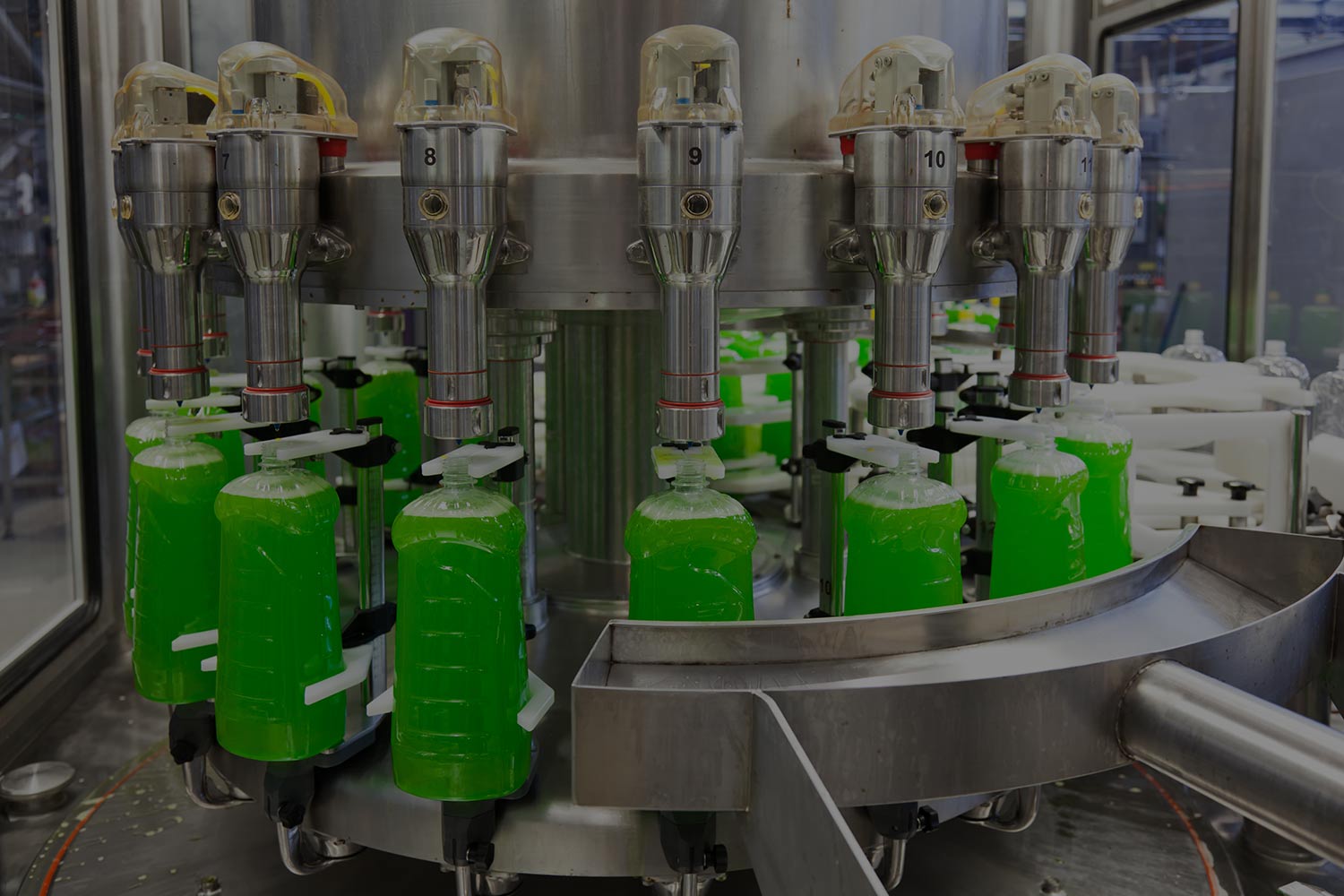
A piston filler vs rotary filler decision is not simply a choice between two competing filling principles. A piston filler describes how product is metered: a piston draws in and dispenses a measured volume. A rotary filler usually describes how containers move: they travel around a circular turret beneath multiple filling stations. That distinction matters because a rotary machine can use piston filling technology.
For products that are thick, particulate-containing, or sold in many container sizes, a piston filling machine is often the practical starting point. A rotary liquid filler becomes more compelling when a stable bottle or jar format, sustained high output, and integrated line handling justify the additional mechanical complexity. The right choice depends on the full application, not a headline speed figure.
Start by separating metering from machine layout
The terminology can cause avoidable confusion during equipment discussions.
- Piston filling is a volumetric liquid filling method. A piston moves within a cylinder to pull a defined product volume into the cylinder and then discharge it through a valve and nozzle.
- Rotary filling is a container-handling architecture. Bottles, jars, or other rigid packages are indexed or moved continuously around a carousel, with several filling heads working in parallel.
- Inline filling moves containers along a straight conveyor, typically stopping or indexing them under a bank of filling nozzles.
An inline piston filler is common for flexible, moderate-output applications. A rotary piston filler combines piston metering with a rotary turret and is intended to increase output while retaining the advantages of piston dosing. Equipment makers also offer rotary systems using other filling methods, such as time-pressure or pump-based filling.
This means the first specification question should be: What metering method does the product need? The second is: What container-flow layout does the required output need?
Piston filler vs rotary filler at a glance
| Selection factor | Piston filler, commonly inline | Rotary liquid filler, including rotary piston designs |
|---|---|---|
| Primary strength | Product versatility and measured volumetric dosing | High, sustained container throughput in a compact circular footprint |
| Typical product fit | Thin liquids through dense sauces, pastes, and some particulate products | Depends on the filling technology selected; often suited to stable, repeatable applications |
| Container handling | Straight-line conveyor; generally accessible and adaptable | Starwheels, guides, and a turret coordinate container movement |
| Changeovers | Often simpler for different package sizes and short runs | Can require more format parts and adjustment points |
| Cleaning access | Usually more open around cylinders, valves, and nozzles | Can be more involved because of the turret and integrated handling components |
| Capital and operating complexity | Usually lower system complexity | Usually greater mechanical, controls, and format-management complexity |
| Best fit | Product variety, frequent changes, moderate line demand | Dedicated or long-running formats with output demands beyond a practical inline arrangement |
The table is directional, not a substitute for a vendor trial. A well-designed inline system can be highly automated, and a rotary machine can be configured for efficient changeovers. The product, package, and line controls determine the final result.
How a piston filling machine works
A piston filler meters product by cylinder displacement. During the intake stroke, product enters the cylinder through an inlet valve or manifold. During the discharge stroke, the piston pushes that measured volume toward the filling nozzle. Fill volume is adjusted through the stroke setting, piston diameter, or a combination of mechanical and recipe controls.
This volumetric approach is particularly useful when the package should receive a repeatable measured quantity rather than a fill-to-level appearance. It is widely used for sauces, dressings, dairy products, spreads, creams, and other products whose viscosity makes gravity filling less suitable. CFT Food Machinery notes that piston fillers can handle products ranging from liquids to dense pastes and products containing solid particles.
Where piston fillers perform well
Piston metering is often a strong candidate when the product has one or more of these traits:
- High or variable viscosity
- Suspended herbs, vegetable pieces, fruit pieces, or other inclusions
- A tendency to string, tail, or drip at the nozzle
- A need for controlled, repeatable volumetric fills
- Multiple container sizes or fill volumes on the same line
- Production schedules with frequent product or package changes
The phrase “can handle particulates” still needs qualification. The maximum particle size, particle concentration, product shear sensitivity, valve design, hose diameter, nozzle opening, and transfer path all affect actual performance. A sauce with soft herb flecks is a very different application from a chunky relish or a thick product with fragile inclusions.
Piston filler limitations to consider
Piston systems have moving seals, valves, cylinders, manifolds, and nozzles that must remain in good condition. Wear, seal compatibility, product buildup, and valve timing can affect fill consistency and sanitation. Very thin, foamy, aerated, or highly volatile products may need a different filling method or carefully selected nozzles and controls.
A piston filler can also become a production constraint if the line requires substantially more filling heads, faster indexing, or a continuous container flow than an inline layout can support comfortably. Adding heads may raise output, but it also increases product distribution, cleaning, and synchronization requirements.
What changes with a rotary liquid filler
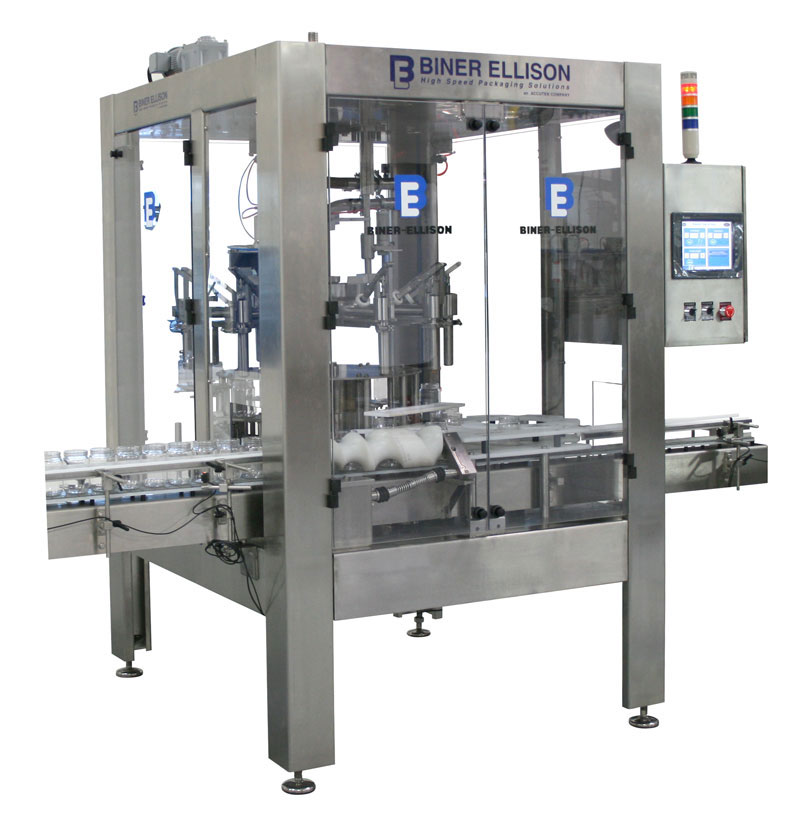
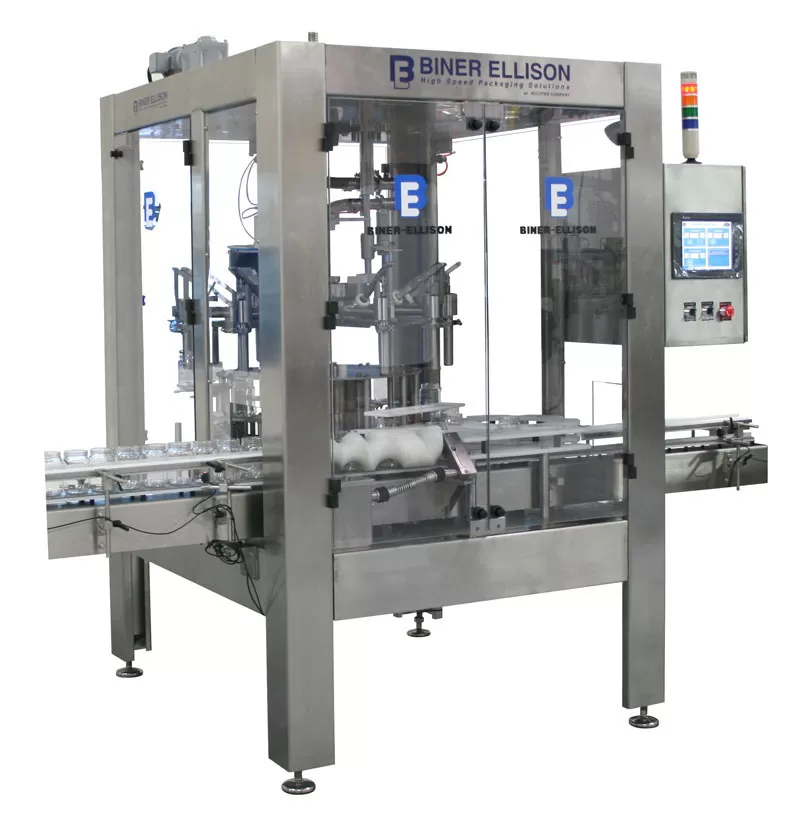
A rotary filler uses a turret to place containers at repeated positions beneath filling heads. Containers are normally separated, guided, and transferred with timing screws, starwheels, neck-handling components, or base-support systems, depending on the package design. Multiple filling operations occur as the turret turns.
Source: accutekpackaging
This arrangement can support continuous or closely coordinated operation and allows many heads to fill in parallel. It is especially useful where one package format runs for long periods and the upstream and downstream equipment can sustain the filler’s pace.
The benefit is not merely a higher theoretical bottles-per-minute rating. The benefit is line balance: containers must arrive correctly spaced, remain stable through filling, transfer reliably to capping or sealing, and clear downstream without accumulating. A rotary filler that repeatedly waits for containers or backs up behind a capper does not deliver its intended advantage.
Rotary filler trade-offs
Rotary equipment adds container-control hardware and more synchronized mechanisms. That may mean:
- More format-specific parts for bottles, jars, or cans
- More adjustment and verification during package changeover
- Greater consequences from unstable or poorly dimensioned containers
- More complex access around the turret, guarding, and transfer points
- A stronger need for competent preventive maintenance and controls support
Rotary systems are often a sound choice for a focused product family and dependable package supply. They can be a poor fit for a plant that changes bottle geometry several times a day, runs irregular short campaigns, or has limited technical support for a more integrated machine.
Match the filler to product behavior, not just viscosity
Viscosity is important, but it is only one part of the product profile. Before comparing quotations, document the product’s real filling behavior under production conditions.
Product questions to answer
- Does the product flow consistently? Record whether it is Newtonian or changes resistance when pumped, mixed, or held.
- Does it contain particles? Identify their largest expected dimensions, concentration, firmness, and whether they settle.
- Is it shear-sensitive? Some emulsions, dairy products, aerated products, and particulate foods can change texture under unsuitable pumping or valve action.
- Does it foam or entrain air? Foaming may require bottom-up filling, diving nozzles, slower final filling, or other controls.
- Does it drip or string? Nozzle shutoff design, suck-back, nozzle travel, and product temperature can influence package cleanliness.
- How does temperature affect flow? Define the expected filling temperature range and the product’s viscosity across that range. Verify requirements with the process and quality teams rather than assuming room-temperature trial behavior will represent production.
For a viscous product filling machine, product transfer is as important as the filler itself. Pump selection, hopper design, agitation, pipe diameter, dead-leg control, and the distance from process vessel to filler can determine whether product reaches every head consistently.
Container format can decide the machine architecture
An inline machine is often forgiving of a broader set of containers because guides and conveyor settings can be adjusted without changing a complete turret path. It can suit jars, bottles, tubs, and other packages when the container remains stable on the conveyor.
Rotary fillers depend on precise container control. The supplier should evaluate samples of every bottle, closure, and label-panel configuration that will run on the line. Lightweight bottles, unusually shaped containers, wide-mouth jars, unstable bases, and high-center-of-gravity packages can require specialized handling.
Ask specifically how the system manages:
- Container infeed spacing and accumulation
- Bottle orientation where required
- Neck, body, or base support
- No-container/no-fill detection
- Reject handling for underfill, overfill, or tipped containers
- Transfer to the capper, seamer, induction sealer, or downstream equipment
A filler is not isolated equipment. Its practical output is limited by the least capable point in the line.
Evaluate output as a sustained operating target
Do not select a machine from a nominal maximum speed alone. Instead, establish the output required during normal operation, allowing for product replenishment, container supply, capping interruptions, quality checks, planned changeovers, and cleaning.
A useful comparison request includes:
- Required units per minute by SKU and container size
- Fill volume range and acceptable fill-weight or volume tolerance
- Planned production hours and campaign length
- Number of annual product and package changeovers
- Expected upstream product supply conditions
- Downstream closure and labeling capacity
- Available floor space, utilities, and access for service
Some manufacturers cite very high speeds for specialized rotary piston systems, but those figures apply to particular configurations and products. They should not be treated as a universal rotary-filler benchmark. Request an application-specific performance basis, including the product, fill size, container, number of heads, and whether the stated rate is continuous, demonstrated, or nominal.
Cleaning, hygiene, and changeover should be designed in early
Food processors should review cleaning arrangements before committing to a filler layout. Accessible product-contact components can reduce manual work during product changes, while automated clean-in-place capability may support repeatable cleaning on suitable systems. Neither approach is automatically better.
For each proposed machine, ask the supplier to identify:
- All product-contact materials and seal materials
- Components removed during cleaning or size change
- Whether cylinders, valves, manifolds, and nozzles can be dismantled without special tools
- The intended cleaning procedure and its validation responsibilities
- Product-hold-up locations and drainage arrangements
- How allergen or flavor carryover risk will be managed for the plant’s products
- The time, labor, and format parts required for a typical changeover
Cleaning procedures, chemicals, temperatures, times, and verification methods should be established by the processor’s sanitation, quality, and equipment teams for the actual product and system. They should not be assumed from a general machine description.
A practical selection framework
Choose an inline piston filler when product behavior is challenging, SKU and container variety are significant, operators need open access, and the required output can be met without forcing the machine or line into an overly fast cycle.
Choose a rotary filler when the line needs sustained high throughput, containers are consistent and stable, runs are long enough to absorb changeover effort, and the plant can support coordinated container handling, maintenance, and integrated controls.
Choose a rotary piston filler when both conditions apply: the product needs positive volumetric piston dosing and the production target justifies a turret-based layout. This configuration avoids the false choice implied by “piston versus rotary.”
Questions to put in an equipment specification
Before requesting final proposals, provide suppliers with a written application sheet and ask them to respond to the same points:
- Which filling principle is proposed, and why is it suitable for this product?
- Has the proposed valve and nozzle configuration been evaluated with representative product and package samples?
- What fill range can be covered without changing major components?
- Which format parts are needed for every planned container?
- What is the expected changeover sequence, and which steps require tools?
- How are fill settings stored, verified, and protected from unintended changes?
- What product-contact components require routine inspection or replacement?
- What upstream pump, hopper, agitation, and product-feed conditions are assumed?
- What controls are included for no-container/no-fill, low product supply, rejects, and downstream backup?
- What access is required for cleaning, maintenance, and safe operation?
The strongest liquid filling machine selection is usually the one that meets the required output with the least unnecessary complexity while preserving product quality, package control, and maintainable cleaning access. For many processors, that is an inline piston system. For a stable, high-output packaging operation, a rotary configuration may be justified. The product trial and complete line review should make the final choice.
References
- Piston and Rotary Filling Machines: How to Choose?. (n.d.). https://www.lienm.com/blogs/piston-and-rotary-filling-machines
- Volumetric Fillers vs. Piston Filling Machine: What You Need to Know. (n.d.). https://blog.apexfilling.com/volumetric-fillers-vs-piston-filling-machine-what-you-need-to-know
- Types Of Complete Filling Lines For The Food Industry. (n.d.). https://www.fillers.com/2020/07/10/types-of-complete-filling-lines-for-the-food-industry
- PISTON VS ROTOR PUMP FILLING MACHINES - LinkedIn. (n.d.). https://www.linkedin.com/pulse/piston-vs-rotor-pump-filling-machines-jessie-peng-itqhc
- The Ultimate Guide to Filling Machines: Types, Applications …. (n.d.). https://www.zonesunpack.com/blogs/news/the-ultimate-guide-to-filling-machines-types-applications-and-pros-cons
- Liquid Filling Machines, Liquid Filler - Cozzoli Machine Company. (n.d.). https://www.cozzoli.com/type/industrial-liquid-filling-machines
- Rotary vs. Inline Liquid Filling Machine: What’s the Difference? - E-PAK Machinery. (n.d.). https://www.epakmachinery.com/blog/rotary-liquid-filling-machine-vs-inline-liquid-filling-machine
- Types of filling machines - CFT Food Machinery. (n.d.). https://www.cft-group.com/types-of-filling-machines